Forecasting
Part of Media forecasting and scenario planning
Building a media plan with optimistic and cautious assumptions
Create comparable cautious, base and optimistic media plans, keep assumptions visible, and decide what evidence would change the buy.
Build optimistic and cautious versions of a media plan by changing stated inputs while keeping the campaign question fixed. Use the same audience, dates, outcome definition and cost boundary in each case. Ask which assumption would change the spending decision.
Fix the comparison first
Start with a base plan: the proposed placement, eligible Australian market, flight, creative, media budget and business outcome. Record the source and date of each input.
A supplier quote can inform price; a platform forecast can inform delivery for its supported inventory; a previous campaign may inform response if its conditions are comparable. Label an unsupported input as planning judgement.
If an optimistic case buys a broader audience or runs longer, present it as an alternative plan. It cannot isolate uncertainty in the original plan.
Build the cases
Choose two or three inputs that could plausibly move, such as CPM, inventory available at that price or customer response. Explain why each value is credible.
Avoid counting the same risk twice: a platform delivery forecast may already reflect its assumed price and inventory. Keep production, fees and GST treatment visible when comparing the total amount payable.
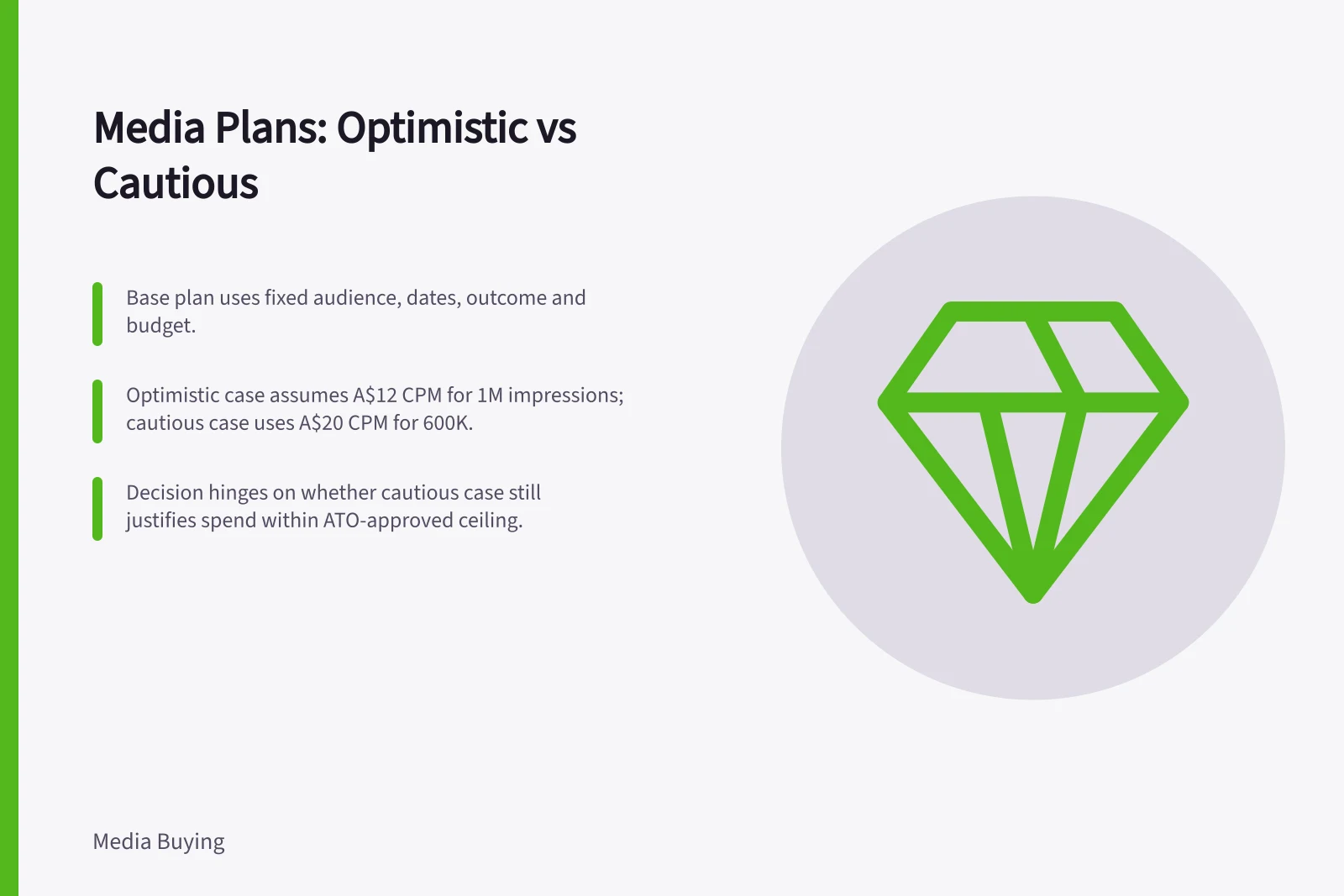
This hypothetical calculation isolates price. With A$12,000 of media spend and every impression priced at the assumed CPM, A$15 CPM implies 800,000 impressions. A cautious A$20 CPM implies 600,000; an optimistic A$12 CPM implies 1,000,000.
These invented prices and volumes are not Australian market evidence. They do not estimate unique reach, attention or sales.
| Case | Price assumption | Impressions at A$12,000 | What to check |
|---|---|---|---|
| Cautious | A$20 CPM | 600,000 | Could the current buying conditions make this plausible? |
| Base | A$15 CPM | 800,000 | Does the proposed inventory match this price basis? |
| Optimistic | A$12 CPM | 1,000,000 | Is enough eligible inventory available at this price? |
If an outcome estimate is needed, use a separate response assumption tied to the agreed business outcome. Do not multiply impressions by an old conversion rate as though every impression were an independent customer opportunity. Delivery and business outcomes need different evidence.
Check combinations and limits
An optimistic case should describe coherent conditions, not collect every favourable value. Higher demand might raise auction prices while also raising customer interest.
A cautious case describes a credible adverse condition, not the worst possible result. Neither case is a statistical confidence bound.
Record the settings and inventory covered by each platform forecast, and check that they match the plan before relying on the estimate.
Turn cases into action
Write the decision under each case. If the cautious case still justifies the buy, it may proceed within the approved ceiling. If only the optimistic case works, seek a firmer price or inventory answer, reduce the commitment or stage the buy.
Set an early review of actual CPM, spend, eligible delivery and the business outcome record. Preserve the original assumptions when updating a case.