Reach & Frequency
Reach and frequency planning
Plan audience reach and repeated ad exposure together, with clear definitions, overlap assumptions and a review of delivery.
Reach and frequency planning sets how many people a campaign should try to contact and how often. Begin with the communication task, define the audience and period, then compare feasible plans for unique reach and repeated exposure. Additional impressions may reach new people, add contacts among people already reached, or do both.
Define the exposure the task calls for
A new offer may call for broad initial coverage. A message that needs explanation and a later reminder may call for repeated opportunities to encounter it. State the task beside the business outcome so the team can judge whether the proposed exposure pattern serves a purpose.
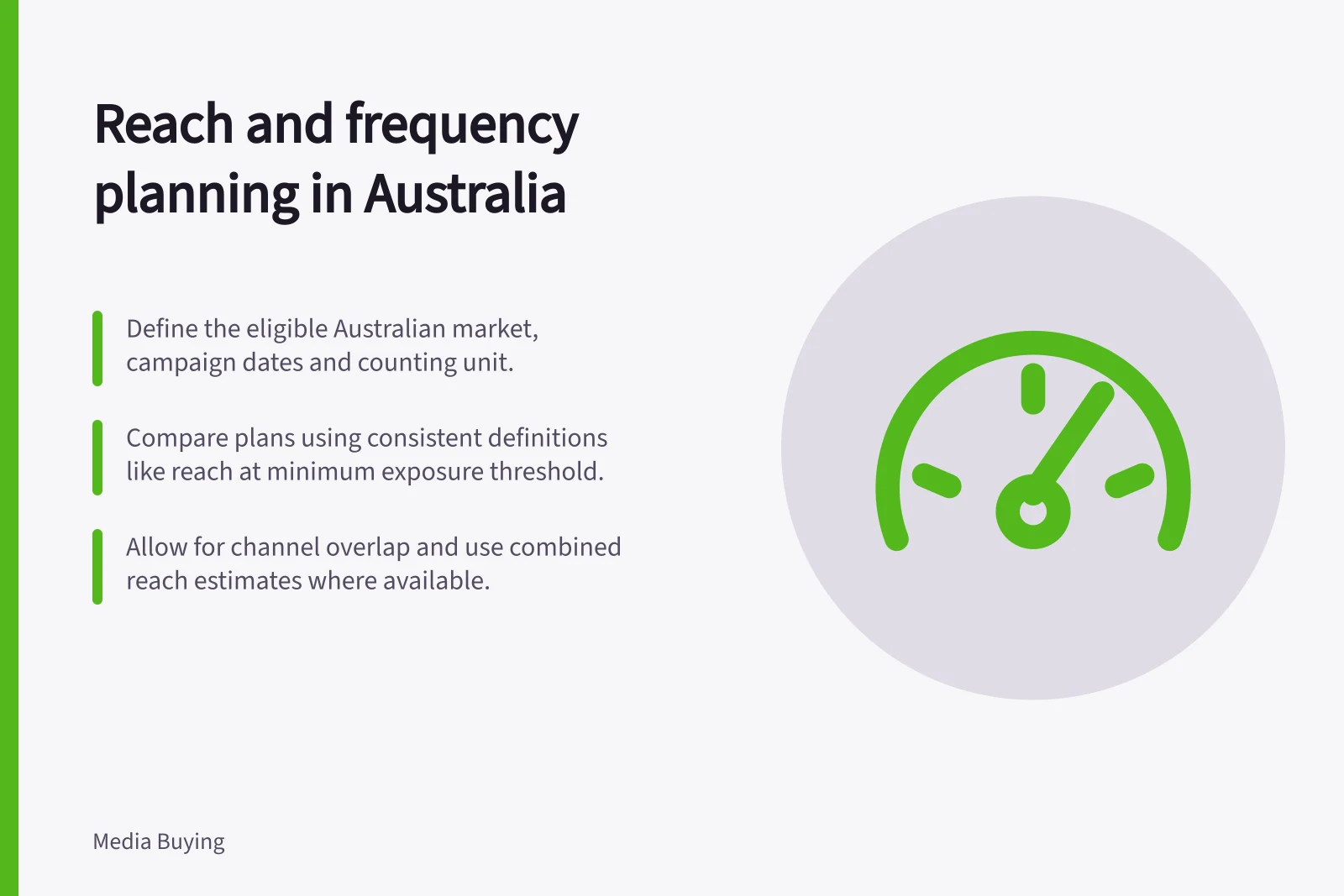
Define the eligible Australian market, campaign dates and counting unit. Say whether reach means people served an ad at least once or people served it at least a specified minimum number of times. Keep the period attached to every figure: weekly frequency and campaign-long frequency answer different questions.
| Measure | What it describes | Limit |
|---|---|---|
| Impressions | Counted ad deliveries | Several can relate to one person. |
| Reach | People estimated to have been served an ad | The estimate depends on the supplier’s method. |
| Reach at a minimum exposure threshold | People estimated to have met a specified exposure threshold | The threshold does not prove that the message worked. |
| Average frequency | Counted exposures per reached person, using matching figures | The average hides how exposure is distributed. |
An impression does not establish attention, understanding or a sale. A platform’s total content audience does not show how many people a particular buy will reach.
Key Metrics in Reach and Frequency Planning
- Impressions
- Counted ad deliveries
- Reach
- People estimated to have been served an ad
- Reach at a minimum exposure threshold
- People estimated to have met a specified exposure threshold
- Average frequency
- Counted exposures per reached person, using matching figures
Compare plans on matching definitions
For each option, request the proposed audience, dates, placements, spend, estimated impressions, unique reach and frequency distribution where available. Check whether the reported unit is people, households, accounts or devices. Compare like periods and populations before drawing a conclusion.
Look beyond average frequency. One plan may give many people one contact; another may concentrate impressions among fewer people. Compare reach at exposure thresholds relevant to the task and the share forecast to receive substantially more than intended.
A forecast is a scenario, not booked delivery. Check the planning tool’s documentation for supported plan types, settings, market availability, access requirements and what its reach estimate represents.
Steps in Reach and Frequency Planning
- Define the eligible Australian market, campaign dates, and counting unitEnsure consistency in measurement across platforms
- Request audience, placements, spend, impressions, reach, and frequency distributionCompare like periods and populations before drawing conclusions
- Check for overlap across channelsAvoid double-counting unique reach; assess reinforcement value
- Set controls and review deliveryUse frequency caps or target-frequency settings; track forecast vs actual
Allow for overlap across channels
Separate suppliers may reach some of the same people. Adding their unique-reach figures does not establish campaign-wide unique reach. Ask for a combined estimate with its method and coverage. If no suitable measure exists, show plausible overlap scenarios and keep the separate channel figures.
Overlap can be useful when the task calls for repetition. Decide whether those repeated contacts justify their share of impressions while eligible people remain unreached. Keep expected reinforcement and expected added reach visible in the plan.
Australian Ad Industry Context: Key Considerations
- Australia's fragmented media landscape
- Platforms like Voz are changing TV appeal for advertisers
- Adjacency risk in news advertising
- Brands are shunning news ads due to content alignment concerns
- ATO’s role in tax compliance
- Supports transparency in digital ad spend reporting
Set controls and review delivery
Choose the frequency objective and its time window before selecting a buying control. A frequency cap limits counted exposures under its particular rules; a target-frequency setting aims to build repeated exposure. Neither guarantees that every person receives the chosen number.
Buying platforms may offer frequency caps or target-frequency settings. Check availability, eligibility and counting rules for the specific campaign and setting.
Set an early delivery check and a later review of available reach, frequency distribution and the agreed business outcome. Investigate concentration, missing reach data, setting changes and differences between forecast and delivery. Keep the original assumptions so the review can explain what changed.
In this guide
- Reach versus impressions in a media planUnderstand how reach differs from impressions, calculate average frequency and check the definitions behind a media proposal.
- Estimating audience duplication across channelsEstimate cross-channel audience overlap without double-counting reach, and show how uncertain duplication changes the combined figure.
- Choosing a frequency objective from the communication taskSet a frequency objective that fits the message, decision window and available controls, then review actual exposure.