Reach & Frequency
Part of Media investment reviews
Comparing planned and delivered audience coverage
Match audience, period and reach definitions before interpreting a gap between forecast coverage and delivered media.
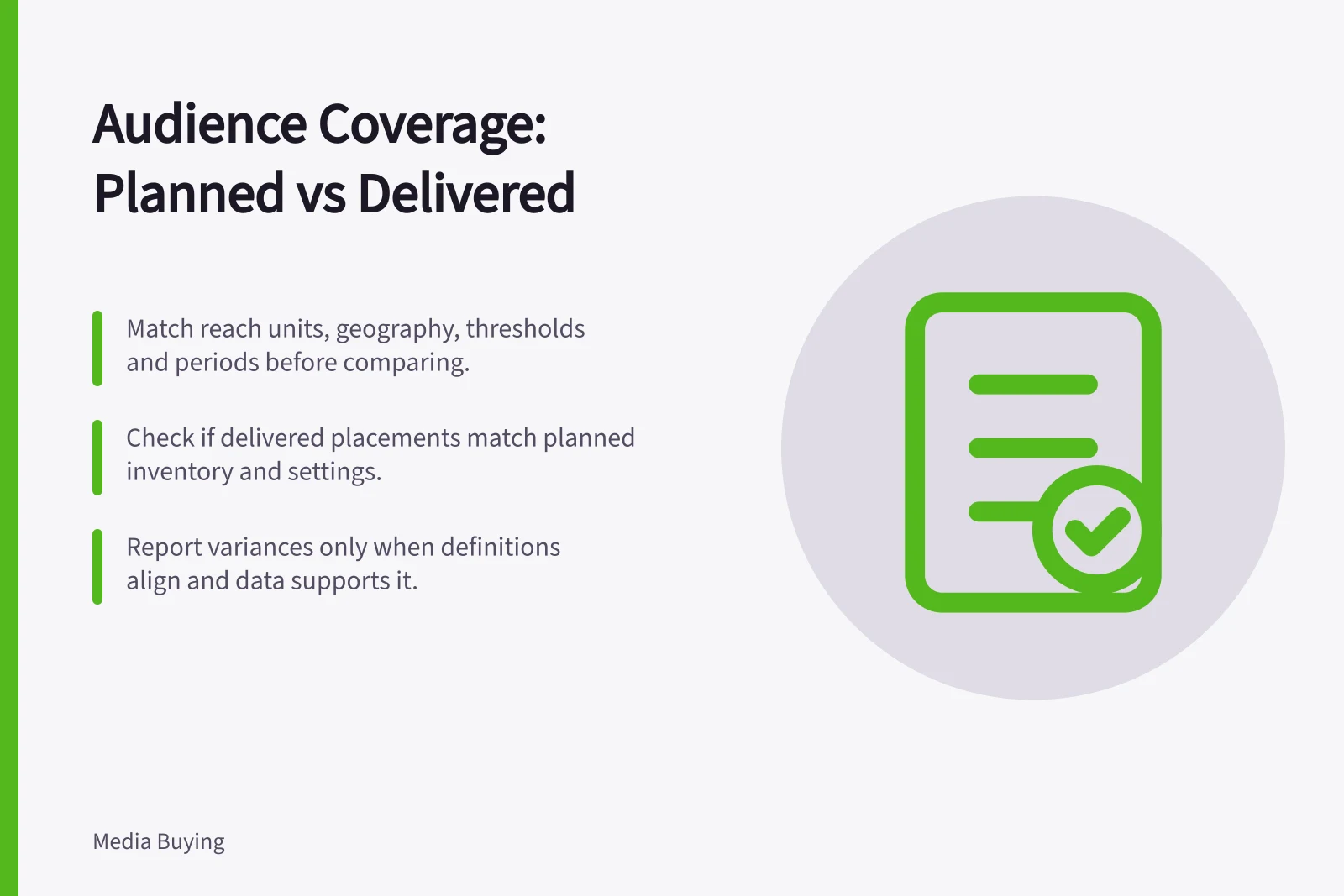
Match planned and delivered audience, reach unit, exposure threshold, geography and period before comparing coverage. If definitions differ, show both figures with their definitions. Do not report a precise reach variance the data cannot support.
Recover the coverage basis
Find the forecast or approved plan version used for the booking. Establish whether its figure described the supplier's total audience, addressable inventory or expected reach for this buy.
Capture the target locations, eligible people, placements, dates, spend, frequency settings and minimum exposure counted. Use the accepted terms to distinguish a forecast from a delivery commitment.
Record what ran. A changed flight, audience setting or format can make the original estimate a poor comparator even when spend is similar. Keep the original and revised versions visible.
| Field | Planned | Delivered | Comparison check |
|---|---|---|---|
| Audience and geography | Approved definition | Live settings and report population | Same eligible market? |
| Reach unit | People, households, accounts or devices | Reported unit and estimation method | Same unit? |
| Threshold and period | For example, 1+ across the flight | Report threshold and dates | Same exposure boundary? |
| Inventory | Proposed placements | Placements that ran | Same opportunity? |
| Spend and frequency | Planned amount and distribution | Actual amount and available distribution | Did repetition replace breadth? |
Planned vs Delivered Audience Coverage: Key Factors for Accurate Comparison
- Audience and geographyApproved definition (planned) vs Live settings and report population (delivered)
- Reach unitPeople, households, accounts or devices (planned) vs Reported unit and estimation method (delivered)
- InventoryProposed placements (planned) vs Placements that ran (delivered)
- Spend and frequencyPlanned amount and distribution (planned) vs Actual amount and available distribution (delivered)
Read a variance at the right level
Where definitions align, calculate delivered minus planned reach and show the difference beside the original estimate. Check whether exposure concentrated in different locations, dates or frequency bands. Meeting an impression target does not establish that the intended number of distinct people was served.
If the delivered report counts devices while the forecast estimates people, retain separate figures. If reach covers only part of the inventory, state that coverage. Do not add separate suppliers' reach figures into a campaign-wide unique audience without a credible overlap method.
Reach figures depend on the definitions and methods in each supplier's report. Check each supplier's own report definition before comparing figures.
How to Interpret a Reach Variance Correctly
- Verify alignment of definitionsEnsure audience, geography, reach unit, threshold and period match between planned and delivered data.
- Calculate variance only when definitions matchReport delivered minus planned reach; do not imply precision where data limits support.
- Check for concentration differencesReview whether exposure shifted across locations, dates or frequency bands.
- Avoid combining units without overlap methodDo not aggregate reach from separate suppliers into a single campaign-wide figure without a credible overlap calculation.
Decide what the gap means
Classify the finding before seeking a remedy:
- Delivery changed:booked dates, placement or settings differed. Record the affected activity under the agreed delivery unit.
- Coverage appears below plan:comparable reach evidence shows a shortfall against an estimate. Investigate inventory, targeting and frequency before assigning a cause.
- Definitions differ:a numerical reach comparison needs a suitable restatement or report.
- Audience evidence is absent:report known delivery and the coverage question left unanswered.
For a regional campaign, a forecast for people in the service area cannot be checked against a national impression total. Request a report for the same market and flight, with its reach method and omitted inventory stated.
If none is available, qualify the coverage conclusion. Record whether the gap affects the channel's intended job and what the next flight needs to measure.
When to Classify a Reach Gap – Implications and Actions
- Delivery changedBooked dates, placement or settings differed. Record under agreed delivery unit.
- Coverage below planComparable reach evidence shows shortfall. Investigate inventory, targeting and frequency before assigning cause.
- Definitions differNumerical comparison requires restatement or clarification. Do not force a direct variance.
- Audience evidence absentReport known delivery and note coverage question as unresolved.