Supplier Evaluation
Part of Media supplier evaluation
Comparing proposals against the same media brief
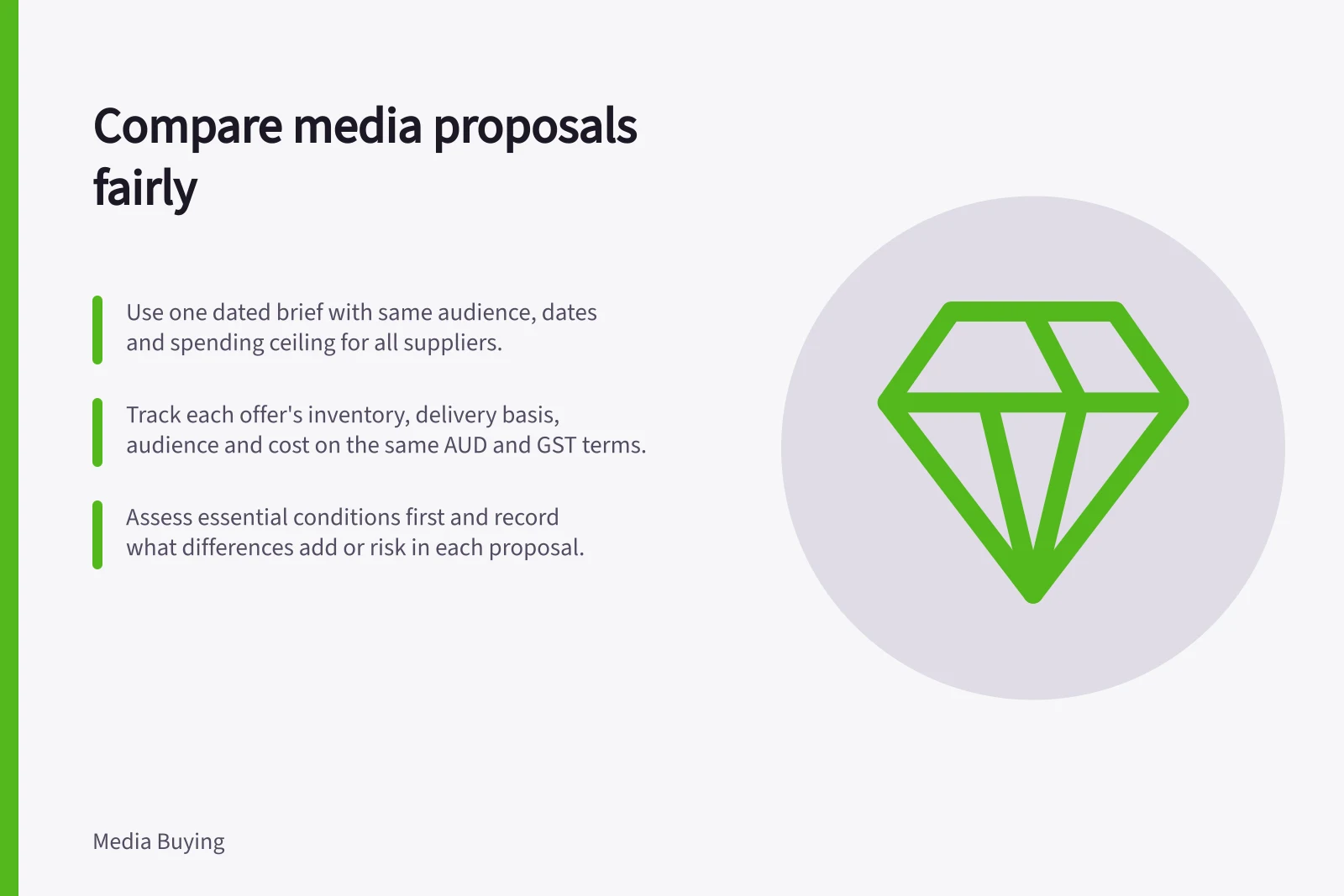
Put media proposals on the same brief, delivery basis, cost boundary and reporting standard before choosing a supplier.
Compare media proposals by putting assumptions, placements and total payable amounts against one dated brief. Ask suppliers to explain departures before treating their offers as comparable.
Issue one decision brief
Give each supplier the same outcome, Australian market, audience, campaign dates, spending ceiling and creative constraints. State which conditions are essential, and invite alternatives that identify their departures.
In a formal tender, communicate the evaluation criteria and material clarifications fairly to participants. Australian agency pitching guidance covers this process; adapt it to the size of the purchase.
A proposal for broader geography, different dates or another response measure may be useful, but it should not be recorded as meeting an unchanged brief.
Put each offer into the same fields
Create one row per proposed placement or deal. Capture the property or eligible inventory, format, audience and location settings, flight, delivery unit, volume, price basis, asset requirement and reporting available. Label each volume as committed, forecast or estimated available inventory.
| Comparison field | Difference to make visible |
|---|---|
| Inventory | A named placement and a broad eligible pool are different offers. |
| Delivery basis | A reserved quantity carries a different commitment from an estimate. |
| Audience and geography | A larger forecast may include people outside the eligible market. |
| Cost | A media rate may exclude required service, technology or production. |
| Reporting | The approved placement must be identifiable at the detail the decision needs. |
Google Ad Manager's help documentation covers the difference between Programmatic Guaranteed and Preferred Deals. Use each supplier's own terms for its offer.
Key Differences in Media Proposal Elements
- InventoryA named placement vs. a broad eligible pool are different offers.
- Delivery basisReserved quantity carries a different commitment than an estimate.
- Audience and geographyLarger forecast may include people outside the eligible Australian market.
- CostMedia rate may exclude required service, technology or production costs.
- ReportingApproved placement must be identifiable at the level needed for ATO and audit compliance.
Compare the decision, not a headline rate
Calculate each total on the same stated AUD and GST basis. Keep undisclosed bundled charges bundled.
Compare the deliverable and necessary supporting work; a CPM alone can obscure a named placement, production requirement or service difference. Check whether assets can meet the booking deadline.
Assess essential conditions first. Seek a revision where the market is wrong or necessary delivery evidence is unavailable.
For feasible offers, record what a dearer option adds, what remains uncertain in a cheaper one and which answer could change the choice. If using a score, set its criteria before reviewing responses and retain the reasons behind it.
Approve a specific proposal version with its assumptions and accepted departures. It becomes the reference for booking and later delivery checks.
Key Evaluation Criteria for Media Proposals
- Cost transparencyAll charges, including GST and service fees, must be disclosed and consistent across offers.
- Delivery certaintyReserved placements have higher commitment than forecasted inventory.
- Reporting detailMust support ATO-compliant tracking and post-campaign analysis.
- Asset readinessCreative assets must meet booking deadlines to avoid delays in campaign launch.