Media Planning
Part of Cross-channel media planning
Choosing channels from audience behaviour
Use observed audience behaviour to shortlist channels, check buyable reach and give each placement a clear job.
Choose a channel because it plausibly reaches the intended audience during a relevant decision. Check whether an available placement and its message format suit the task. General platform popularity is only a clue; it does not show your customers will encounter your ad.
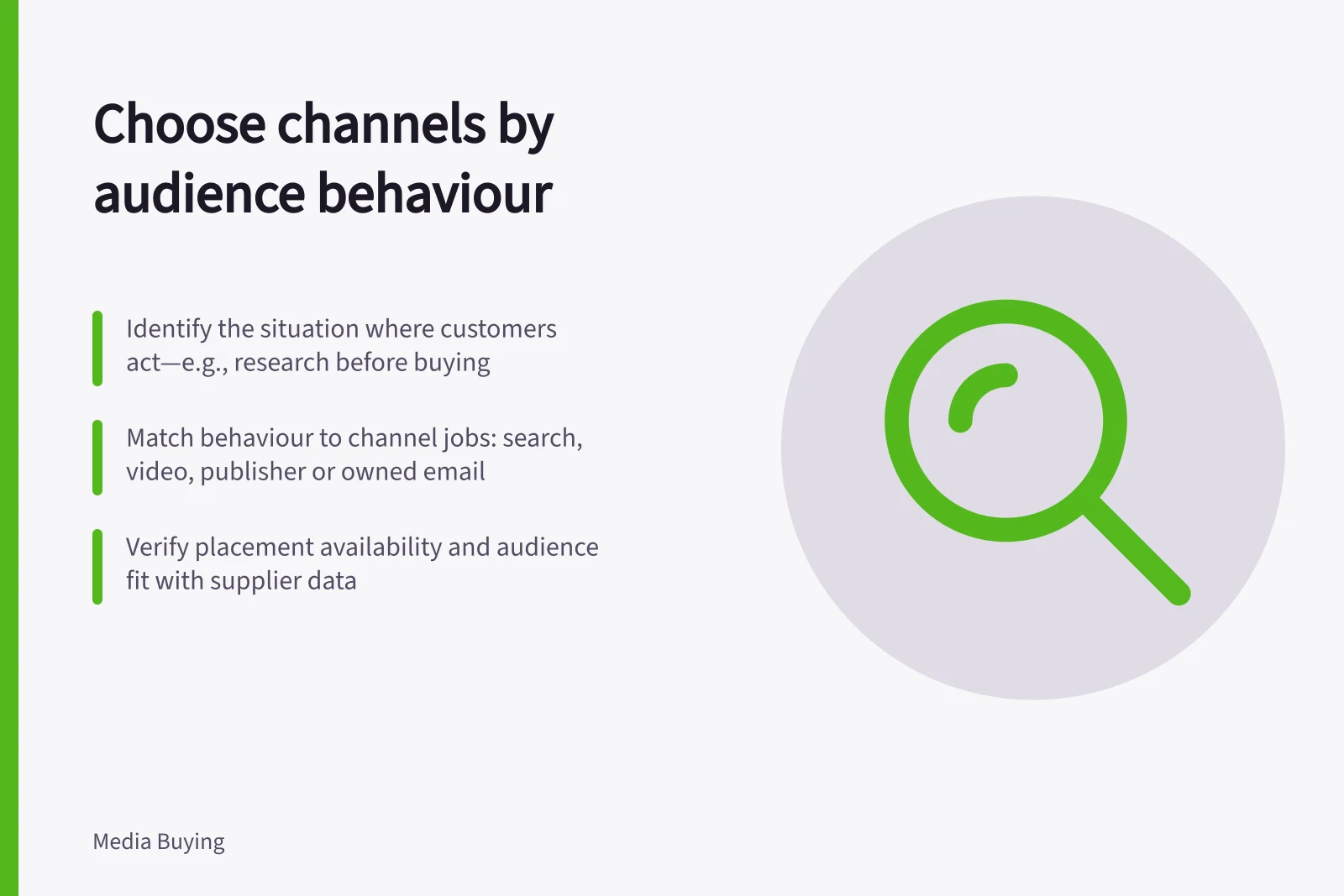
Describe behaviour before naming channels
Use the media brief to identify the situation that matters: what might people do when they first notice the need, where might they compare options, what would they seek just before contacting or buying? Separate observed behaviour from the team's assumptions.
Useful inputs include customer interviews, enquiry wording, site search terms, sales conversations and relevant audience surveys. Record whom each source represents and when it was collected. A national survey of Australian adults can describe broad viewing or listening habits, but it cannot establish the behaviour of a narrow local buying audience. Using a media service also does not mean its advertising inventory is available to the campaign.
Key Sources for Australian Audience Behaviour Insights
- Methodology reference
- ACMA Communications and Media Australia Methodology
- Google Ads guidance
- Google Support: Search Advertising & Video Ad Formats
- Targeting and reach definitions
- Google Ads: Measuring Reach and Frequency (UK-focused but applicable)
Match the behaviour to a channel job
| Audience clue | Channel hypothesis to examine | Question to verify |
|---|---|---|
| People actively seek an answer | Search advertising | Do relevant queries and a suitable destination exist? |
| People need to see a product explained | Video advertising | Can an available format carry the explanation clearly? |
| People consult a relevant publication | Publisher advertising | Is suitable inventory offered in that context? |
| Existing customers may need an update | Owned email or another direct contact | Is that contact appropriate for these customers and this message? |
The last option is an owned contact channel, not purchased ad inventory. All four rows are hypotheses, not promised results. The same audience may use several channels, and each placement may also reach people outside the intended market. For paid placements, ask the supplier about the actual inventory, eligible geography, audience definition and reporting method before booking.
Check the evidence behind each choice
For every shortlisted channel, record the behaviour it addresses, the evidence for that behaviour and the condition that would make it unsuitable. A broad survey might support considering video; local interviews might show buyers need detailed specifications before calling. Neither source alone proves a proposed video placement will reach those buyers.
Distinguish content consumption from buyable reach. Check how a supplier defines and measures reach, and review the assumptions behind any forecast. Treat forecasts as estimates, not guaranteed delivery.
Confirm that the proposed placement is available for your campaign. Other suppliers' forecasts need their own checks because definitions may differ.
Choose roles that fit together. An explanatory placement may introduce the offer, while search or a clear destination lets people investigate it later. If reaching new people matters, examine likely audience overlap rather than adding supplier reach figures together.
Make the selection testable
Record each channel's intended role, the audience evidence behind it and the delivery signal you will check. Revise the choice if the required placement, creative or audience is unavailable. After launch, compare delivered placement and response with the original hypothesis.