Media Planning
Part of Cross-channel media planning
Separating media strategy from channel execution
See which decisions belong to media strategy, which belong to channel execution and when a tactical change needs strategic approval.
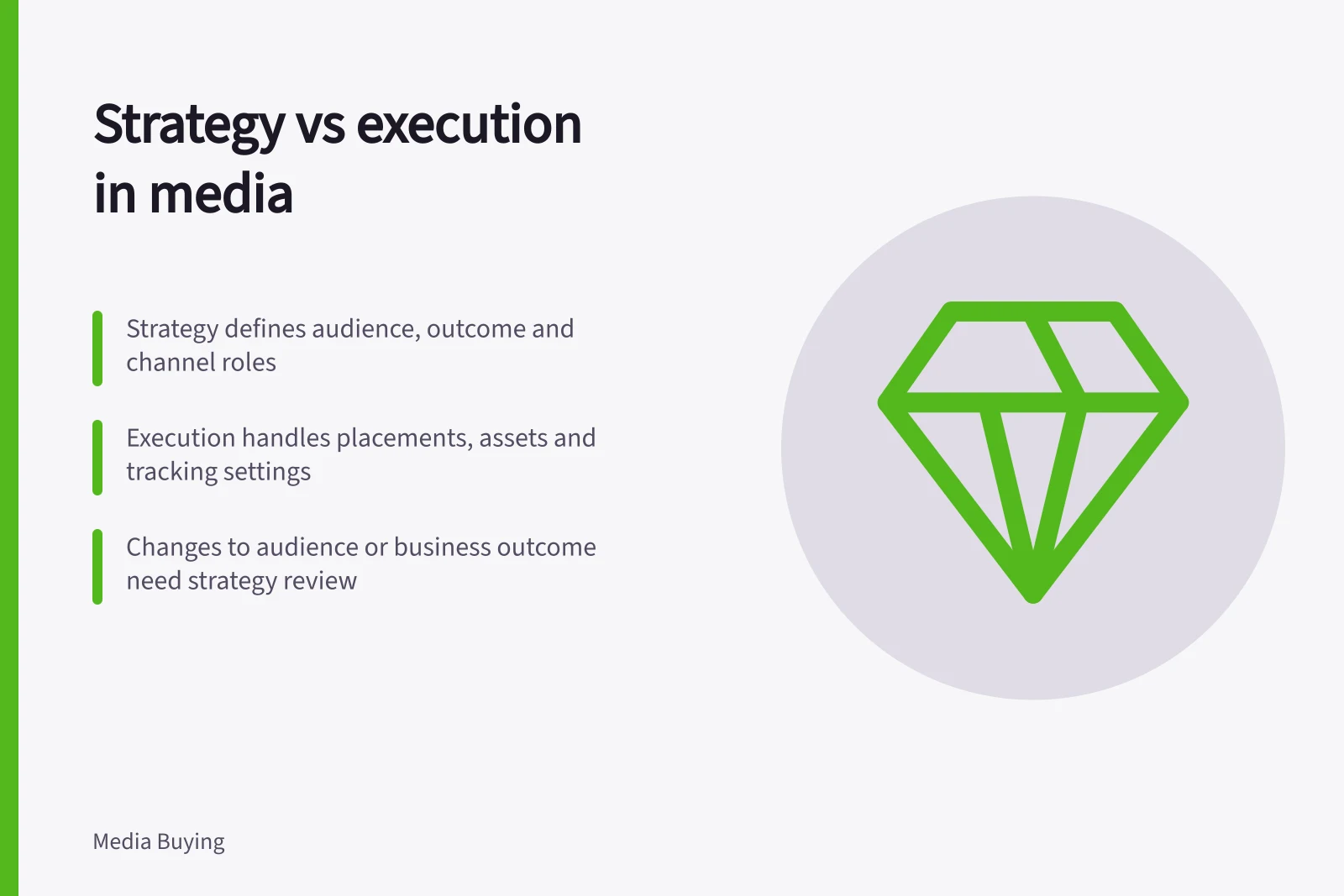
Media strategy sets the business outcome, intended audience, communication task and roles the channels should play. Channel execution turns that direction into placements, settings, assets and delivery checks. The distinction lets a team change a tactic without quietly changing the campaign's purpose.
Put each decision at the right level
The strategy should state the main assumptions behind the approach and what would prompt a reconsideration. Execution should specify available inventory, targeting settings, dates, creative assets, destinations, approval steps and reporting fields for each channel.
Strategy decision / Execution decision
- Address people considering a service in the coverage area
- Confirm eligible location settings and placements
- Explain a feature customers misunderstand
- Produce and approve a suitable ad and destination
- Judge progress using accepted enquiries
- Configure response tracking and reconcile it with the enquiry record
- Give each channel a defined role
- Check the supplier's inventory, format and reporting offer
A strategy need not dictate every platform setting. Operators still need a clear audience and outcome to guide those settings.
Use the distinction when something changes
Suppose a proposed video placement is unavailable. If its job was to explain an unfamiliar service, the team can look for another format that performs that job and confirm the change with the strategy owner. If no available format can do so, the team may need to reconsider the approach.
A bid or file-size change is usually an execution matter when the approved audience, message and channel role remain intact. A new audience, different offer, changed business outcome or removal of a channel with a unique role needs a strategy review. Record the reason, approver and date.
Google Ads documentation covers campaign objectives and campaign creation. These platform controls do not, on their own, define the organisation's business outcome or the roles of other channels.
Give the two levels different evidence
At strategy level, ask whether the audience and communication assumptions still make sense and whether the combined campaign addresses the business decision. At execution level, check whether placements ran as approved, assets and destinations were correct, and data collection worked. Diagnose delivery before deciding whether a weak result calls for a strategy change.
Keep a short strategy record for trade-offs and a more detailed execution register for launch and review. Check them together at agreed points so changes to one channel remain consistent with the overall plan.