Media Planning
Part of Media buying models
Comparing managed buying with in-house execution
Compare managed, in-house and hybrid media buying by tasks, capacity, control, full cost and reporting access.
Compare the work, decision rights and full resource cost for the same campaign to decide who runs the media buy. A managed partner can provide specialist capacity; an in-house team can execute through its own staff and accounts. Either arrangement needs clear approvals and a way to check delivery.
Assign the work
List the tasks from inventory research through booking, setup, creative handoff, live checks, changes and reporting. Give each critical task an owner and a backup. A self-service interface does not remove the work needed to operate it.
| Task | Managed arrangement | In-house arrangement |
|---|---|---|
| Buying recommendation | What evidence supports the partner’s choice? | Who can research and challenge the available inventory? |
| Booking and setup | Who negotiates and configures the buy? | Who has the access and time? |
| Live changes | What may the partner change without approval? | Who covers urgent corrections and absences? |
| Reporting | Which records can the advertiser inspect? | Who will check and interpret them? |
| Cost | What service, technology and data charges apply? | What staff time, tools and support are needed? |
Compare capacity and control
An agency may bring buying experience across publishers and platforms and may negotiate across clients. That does not establish a better price or result for this campaign. Ask who will do the work, how their work is checked and what happens if the assigned people change.
For an in-house plan, allow for training, tool access, review time and cover during absences. Price any specialist help needed for an unfamiliar deal. A hybrid can divide repeatable activity and specialist work, provided one person has final authority for each live change.
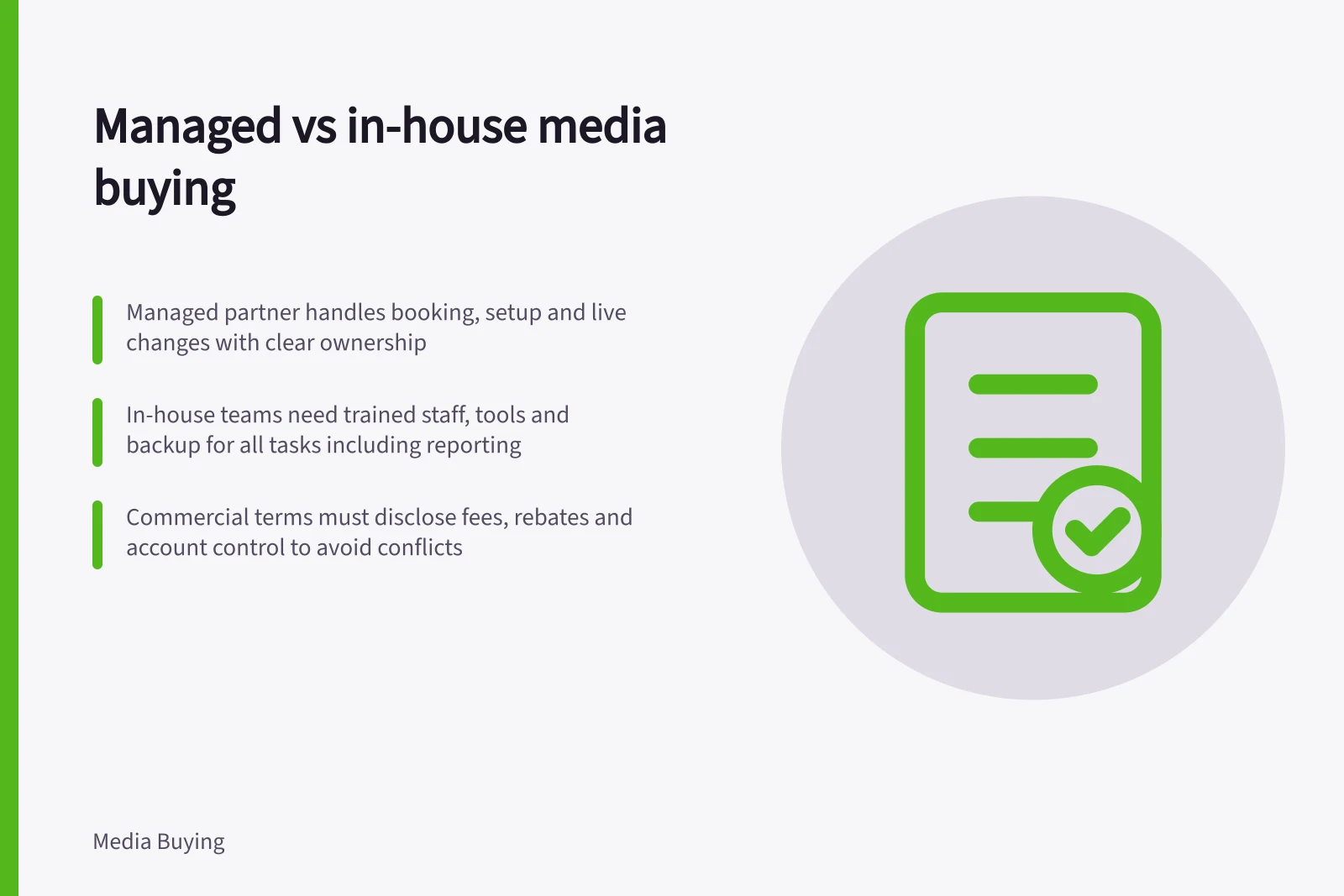
Record who controls the buying account, who can edit a campaign, who approves a spend change and what reports the advertiser receives. These are operating requirements for the proposed arrangement, not assumed benefits of either model.
Compare commercial terms
Ask whether the partner arranges purchases as an agent or sells an agreed package or outcome at an all-in price. Identify the deliverable, total amount payable, fee basis and visibility into underlying costs. A bundled price and an itemised service fee can only be compared when their inclusions are clear.
Ask whether rebates, discounts or payments from recommended sellers or related services could affect the recommendation, and agree on disclosure. Such an incentive is a potential conflict, not evidence of misconduct by a particular partner.
Choose a workable arrangement
Compare the managed, in-house or hybrid plans against the same brief. Check that each assigns every necessary task, stays within the approved cost boundary and can respond when creative is rejected or a placement changes. Approve the responsibility and access record before the buy; use it to review what the team actually delivered.
Key Considerations in Australian Media Buying Arrangements
- Approved cost boundary
- Must be defined and monitored under all arrangements
- Account control
- Record who controls the buying account and approves spend changes
- Reporting access
- Advertisers must be able to inspect and interpret reports
- Change management
- Process must cover creative rejection and placement changes