Media Planning
Matching the same brand promise to different formats
Adapt a campaign promise for search, video, display and publisher placements while keeping the benefit, offer and customer path consistent.
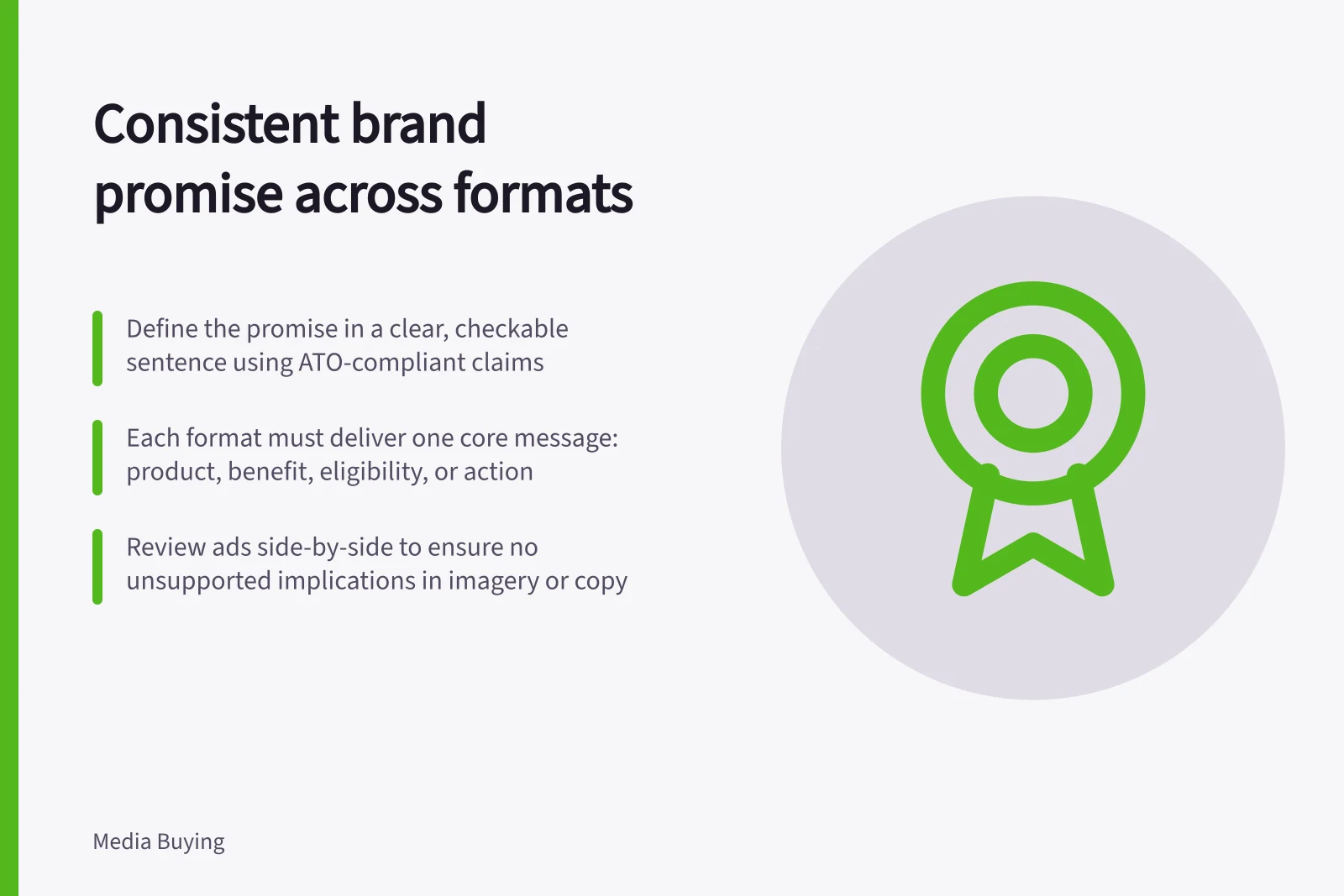
The same brand promise should survive a format change, even when the words, image and order of information change. Define the promise in a sentence that can be checked for accuracy, then choose the part each placement can communicate clearly. Do not force a long claim into a short unit or let a striking image imply a benefit the business cannot support.
Separate the promise from the execution
A useful promise states what the customer can expect. For a hypothetical repair service, the approved promise might cover the repair type and service area. A search ad could name both the service and location directly.
A short video could show the problem, the service and the next step. A display unit might carry the service and one supported benefit. The executions can feel different yet point to the same offer and destination.
Write down the elements that cannot drift: product or service, supported benefit, eligibility, price or offer terms if used, and the action available after the click. Then mark what can change: tone, opening hook, visual crop, pacing and call-to-action wording. This lets reviewers judge an adaptation without demanding identical copy.
Give each format one clear job
Search text often answers a specific question. Lead with the relevant answer, and make sure any qualification needed to understand the claim is clear in the ad.
For a vertical video, consider what is visible and understandable in the opening moments, whether or not the viewer hears the full message. For a small display unit, make the product and main idea legible without relying on dense overlaid text. For a publisher placement, check the actual placement specification and surrounding context before finalising the layout. These are creative decisions, not universal platform rules.
A short ad can lead to fuller details on a landing page, but that page should explain the offer rather than reverse the ad's impression. The Australian Competition and Consumer Commission says it can require businesses to back up claims about their products or services and may investigate misleading claims.
Review adaptations side by side
Place the proposed ads beside the approved promise and landing page. Ask three questions of each execution:
- Would a customer recognise the same product, benefit and offer?
- Does the format make any unsupported implication through imagery, voiceover or omitted conditions?
- Is the next step consistent with what the destination actually provides?
Then review likely platform combinations and crops, not only the design file. Check that the image and message remain clear in the intended placement and crop.
Record an approved version for every format. If a promise or offer changes, revisit all the executions that express it. Consistency is controlled meaning across placements, not a demand for identical wording.