Media Planning
Adjusting a media schedule after a delayed launch
When a launch slips, do not simply move the campaign in a calendar and assume every ad and destination changed with it. Identify what has already started, what can …

Archive
Media Planning
When a launch slips, do not simply move the campaign in a calendar and assume every ad and destination changed with it. Identify what has already started, what can …
Media Planning
Set a learning allocation that can answer a useful question while protecting justified established activity.
Supplier Evaluation
Specify placement IDs, dates, delivery units, spend basis and omissions so supplier reports can be checked against the approved buy.
Media Planning
Keep campaign prices, dates, eligibility and fulfilment terms consistent across ads, landing pages and supplier placements.
Reach & Frequency
Assess how suitability exclusions affect eligible inventory and audience opportunity while preserving essential brand protections.
Forecasting
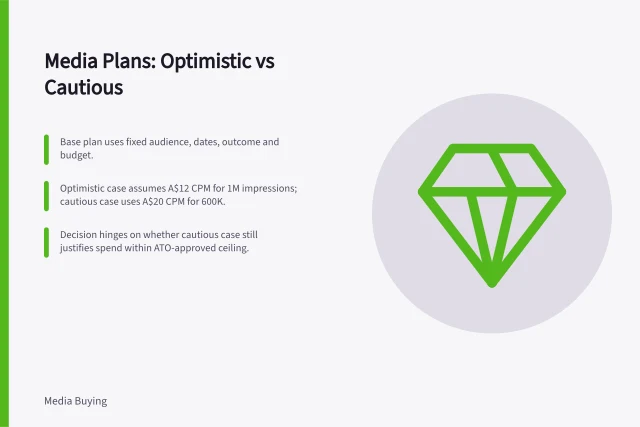
Create comparable cautious, base and optimistic media plans, keep assumptions visible, and decide what evidence would change the buy.
Supplier Evaluation
Ask for a comparable booking, delivery report and exception record to assess a media supplier's delivery claim.
Reach & Frequency
Check service-area fit, bookable inventory, location settings and delivery reports when assessing whether a channel covers the intended market.
Measurement Design
Audit outcome, media, spend, dates, geography, missing values and variation before using data for a marketing mix model.
Reach & Frequency
Set a frequency objective that fits the message, decision window and available controls, then review actual exposure.
Measurement Design
Check targeting, outcome data, pre-test patterns, spillover and precision before choosing areas for a media experiment.
Media Planning
Use observed audience behaviour to shortlist channels, check buyable reach and give each placement a clear job.
Measurement Design
Define one countable business outcome for a cross-channel campaign while keeping channel response and delivery metrics in their proper roles.
Supplier Evaluation
Map account administrators, data-use rights and handover steps before a media supplier starts work.
Measurement Design
See what an ordinary historical media report can show, what a holdout adds and when neither supports a confident causal claim.
Reach & Frequency
Compare Census, media-use and ad-planning figures by population, period, geography, denominator and method before using them in a media decision.
Reach & Frequency
Compare channel costs using one outcome definition, a clear assignment rule and the same cost boundary.
Reach & Frequency
Continuous media and bursts answer different needs. Continuous activity makes the offer visible across more decision moments; a burst concentrates attention around …
Media Planning
Compare managed, in-house and hybrid media buying by tasks, capacity, control, full cost and reporting access.
Measurement Design
Align outcomes, spend changes, markets and uncertainty before comparing an MMM estimate with a media experiment.
Reach & Frequency
Match audience, period and reach definitions before interpreting a gap between forecast coverage and delivered media.
Supplier Evaluation
Put media proposals on the same brief, delivery basis, cost boundary and reporting standard before choosing a supplier.
Measurement Design
Compare viewability, invalid-traffic and suitability figures using their denominators, coverage and format limits.
Media Planning
Media can create a promise before the product team is ready to keep it. Join stock, price, page and service dates to the flight plan so an ad is not eligible to run …
Media Planning
Plan a cross-channel campaign from the business objective through audience, channel roles, feasibility and review points.
Investment Reviews
Use delivery, outcomes, uncertainty and commitments to decide whether to move spend, retest or stop a channel.
Media Planning
Turn a business goal into a media brief with a clear outcome, audience, communication task, constraints and review decision.
Media Planning
Turn brand suitability rules into placement specifications buyers and suppliers can apply and check across channels.
Measurement Design
See what MMM and attribution reporting each measure, why their channel figures can differ, and which result suits a media decision.
Reach & Frequency
Estimate cross-channel audience overlap without double-counting reach, and show how uncertain duplication changes the combined figure.
Forecasting
Use past media results carefully: rebuild comparable rates, show changing conditions, and turn averages into conditional outcome estimates.
Forecasting
Define the audience and reach event, show a transparent planning range and check a supplier forecast against its settings and limits.
Measurement Design
Measure observable leakage in a media test, disclose unknown exposure and assess how spillover may affect the decision.
Measurement Design
Explain a multi-channel campaign result using one business outcome, channel delivery, reporting rules and known limits.
Investment Reviews
Find media spend that failed to answer its intended question and distinguish weak results from missing evidence.
Measurement Design
Plan a media incrementality test around a clear decision, credible comparison, protected delivery and a result that includes uncertainty.
Media Planning
Use a release register to track approved creative, supplier acceptance, live replacements and withdrawal of old campaign assets.
Supplier Evaluation
Identify agency incentives and related services, assess recommendations against the brief, and record approval and disclosure rules.
Measurement Design
Learn how to use marketing mix modelling for media allocation, including the data, assumptions and checks needed before acting on an estimate.
Media Planning
Adapt a campaign promise for search, video, display and publisher placements while keeping the benefit, offer and customer path consistent.
Media Planning
Define an intended market, assess Australian audience sources and check whether a proposed placement offers a credible opportunity to reach buyers.
Media Planning
Build a complete campaign budget, allocate media spend by channel role and set clear rules for reviewing commitments.
Media Planning
Compare inventory routes, in-house and managed execution, and the charges and commitments behind a media buy.
Forecasting
Build media forecasts with stated assumptions, compare cautious and optimistic cases, and set decisions for when costs or delivery change.
Investment Reviews
Review what media was approved, what ran, what the business recorded and which investment decision the evidence supports.
Measurement Design
Plan media measurement around a business outcome, channel delivery, data quality and a clear account of what the campaign can and cannot show.
Supplier Evaluation
A practical guide to approving media commitments, costs, account access, delivery evidence and billing terms before and after a buy.
Media Planning
Set placement and brand suitability standards, interpret verification carefully and review delivery against the approved brief.
Media Planning
A media schedule states when activity runs, what demand or event it serves, and what must be ready before spend starts. A calendar filled with channel dates is not …
Supplier Evaluation
Evaluate media suppliers by brief fit, delivery evidence, reporting, total cost and change terms before approving a booking.
Forecasting
Diagnose higher media prices, recalculate delivery at the approved budget, and choose a response with its audience and cost trade-offs visible.
Investment Reviews
Estimate creative and measurement costs from deliverables and quotes before committing the full campaign budget to media.
Media Planning
Check creative specifications, deadlines, production work and replacement options before committing to a media placement.
Media Planning
A campaign flight should meet the period when people can make the intended decision. Start with evidence of demand and the purchase cycle, then check whether the …
Measurement Design
Use a pre-approval measurement gate to confirm the outcome, method, data access, timing and limits before media is booked.
Reach & Frequency
Plan audience reach and repeated ad exposure together, with clear definitions, overlap assumptions and a review of delivery.
Reach & Frequency
Understand how reach differs from impressions, calculate average frequency and check the definitions behind a media proposal.
Measurement Design
Match bookings, delivery exports and invoices by line item, period, unit and cost basis, then resolve exceptions.
Supplier Evaluation
Define the placement, delivery unit, quantity and permitted changes before accepting a media order.
Measurement Design
Keep an attribution limits register that states the missing link, affected result, reporting treatment and effect on decisions.
Measurement Design
Present incremental lift with its outcome unit, baseline, uncertainty range, design limits and decision threshold.
Investment Reviews
Check an MMM budget scenario's outcome, costs, response curves, constraints and uncertainty before changing media spend.
Supplier Evaluation
Check change cut-offs, cancellation charges, shortfall triggers, replacement inventory and fees before accepting a media deal.
Supplier Evaluation
Investigate and document placements that differ from the approved media brief without overstating report coverage.
Reach & Frequency
Compare like-for-like reach forecasts at two spend levels, calculate the estimated marginal gain, and check frequency and model limits.
Measurement Design
Keep platform delivery and attributed actions distinct from the campaign's shared business result, and explain why reported totals may differ.
Measurement Design
Classify inventory, platform, data and buying-service costs, check fee bases and understand limits on publisher-revenue visibility.
Media Planning
See which decisions belong to media strategy, which belong to channel execution and when a tactical change needs strategic approval.